Also available on

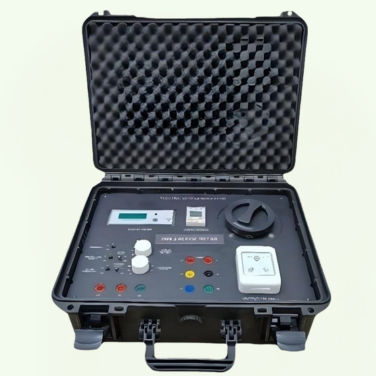
ZeroFootprint AC Type 2 EVSE Test Kit

Power Rating:
15A/ Phase
Variant:
Home
Pro
Compatibility:
Socket type
Type 2 AC Charging Connector

Common brands compatible with this product:

85,000.00

Edit Content

An EV simulator serves as a control system for electric vehicles, commonly used to validate the operation of the charging station and verify that the fundamental functionalities are being performed correctly. Specifically, the AC EV Simulator is capable of simulating charging points equipped with a Type 2 outlet or a tethered cable featuring a Type 2 plug. These tests are conducted by interfacing with the control pilot circuit using the EV simulator, ensuring compatibility and adherence to voltage tolerance limits during regular operations.

Edit Content
  • IEC 61851 proximity pilot circuit testing
  • Control pilot circuit testing
  • Charging state testing
  • Protective earth testing
  • CP-Earth fault testing
  • Cable current setting 
  • Extra cable capacitance option
  • Earth leakage check via LED indication
  • Banana socket output for CP waveform capture
  • Energy, voltage and current parameter display in charging state only
  • External single phase 15A (Max) load can be attached via available 3-Pin socket
  • Banana socket outputs for 3-Phase external load connection up to 15 Amp
  • Using an oscilloscope, every vehicle state according to IEC 61851-1 can be visualised
Edit Content
  • Type 2 AC Charger with Socket or Plug
  • Type 2 to Type 2 cable In case of Socket
  • External CRO to capture PWM signal waveform
  • Banana plugs for jumper connection
  • External 1-phase or 3-phase load up to 15A current capacity

Calculate the ROI amount.

See the performance of the charger.

Calculate time to charge you vehicle.

See and download our brochure.

See Our Projects to be done.

See the frequently asked questions.

ZEROFOOTPRINT CMS & MOBILE APP​

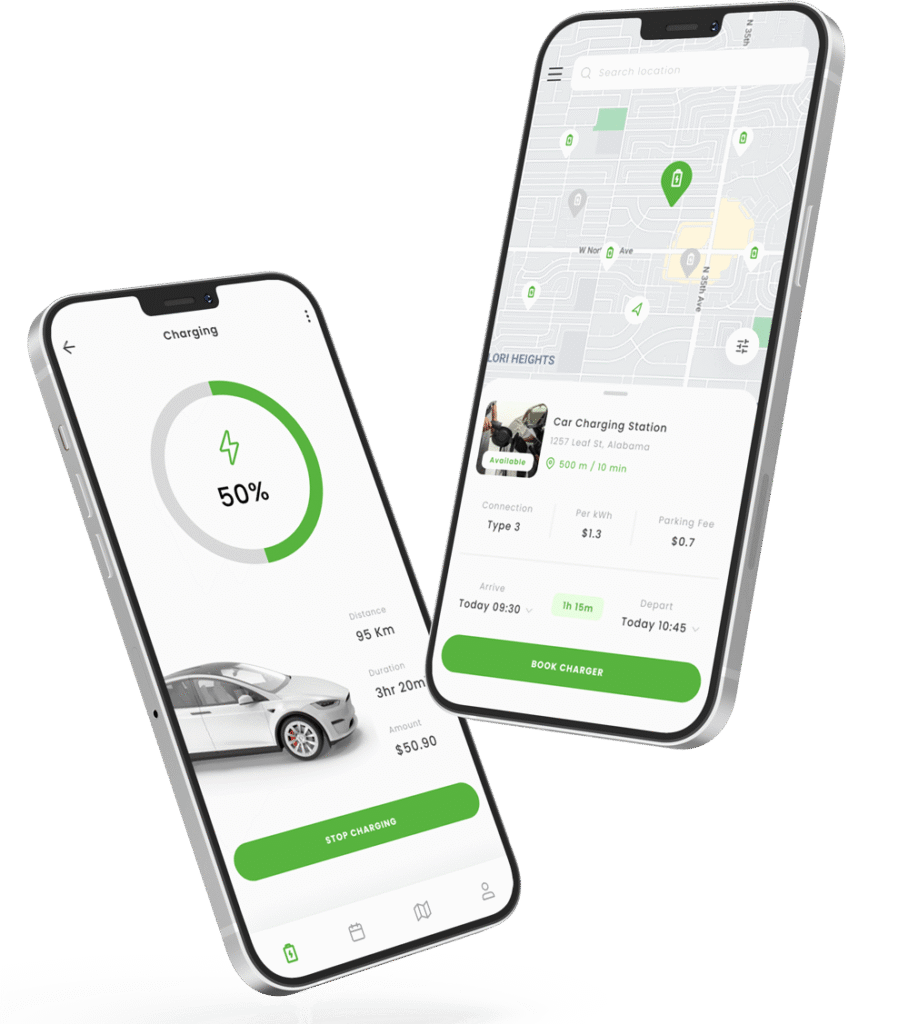
Find An Available Charging Station Near You With Our App

Easily search, book, and schedule charging sessions with a world-class software platform. Charge Point Operators enjoy remote monitoring, user management, billing, and reporting for full control and visibility 

Contact Us

Any Questions? Please share your details and a member of our sales team will reach out to you


Download Our Brochure

Do you need any help?

+91 8655997130
sales@zerofootprint.in

REACH OUT TO US 24/7 & 365 days

Our dedicated team is available 24/7 & 365 days to assist you with any queries to make your journey smoother.


Sessions
Battery
Days
Total Revenue: Rs 2,62,800
Platform Fee
DISCOM
Investment
Net EBITDA: Rs 1,05,280
ROI = 10-11 months

Tata Tiago

(Small Car)

Battery Size

24 kWh

Charging Timr

4 hours

Tata Nexon

(Compsct SUV)

Battery Size

30 kWh

Charging Timr

4.5 hours

MG ZS EV

(Mid-size SUV)

Battery Size

44.5 kWh

Charging Timr

6.5 hours

Kia EV6

(Sports SUV)

Battery Size

77.4 kWh

Charging Timr

10.5 hours

EV Charging Time Calculator

EV Charging Time Calculator

Questions And Answers

The chargers are compatible with vehicles that use CCS-2, CHAdeMO, and GB/T sockets. DC Chargers are most suitable for fast charging Cars, SUV, Trucks, and Buses, etc.

DC fast chargers eliminate a step by delivering DC power directly to the battery, bypassing the car’s onboard charger. This translates to significantly faster charging times compared to AC chargers, which rely on the car’s internal conversion process.

While DC charging boasts significantly faster speeds, the exact time can vary. Factors like charger power output, vehicle battery capacity, and charging protocol all come into play. Typically, reaching 80% charge takes 30 minutes to an hour, depending on the specific capabilities of your car and charger.

While DC fast charging is a game-changer, it’s not universally compatible with all EVs. Factors like connector type and the car’s built-in charging capabilities determine if it can take advantage of this speedy top-up. Thankfully, most modern EVs, especially those geared towards long-distance travel, are built with DC fast charging in mind.

While installing a DC fast charger at home isn’t technically impossible, the high cost and complexity make it impractical for most people. These powerful chargers are ideally suited for public charging stations and highways, providing convenient top-ups for travelers in urban centers and along major routes.

It depends on the charger. While 30 kW can be mounted on the wall/individually & 60 kW onwards machine is as big as a petrol dispenser in the station and might require a space 300 sqft

ZeroFootprint DC chargers can be deployed with a low power capability and later upgraded as needed. This helps lower initial deployment costs, and is useful if high power is not immediately required but flexibility to upgrade later is desired.

For example, the 120 kW DC Charger can accommodate up to four 30 kW power modules, but could be initially deployed with only 60kW capability via two modules. The charger can then be upgraded to its maximum power capability when necessary by simply adding the extra power modules.

Our software and mobile app take the guesswork out of finding DC fast chargers. They provide real-time station availability, pricing, and convenient map views, making it a breeze to locate and plan your charging stops along the way.