Also available on

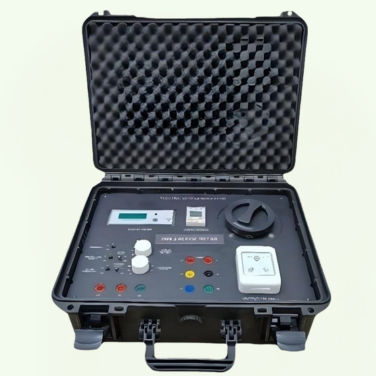
ZeroFootprint AC Type 2 EVSE Test Kit

Power Rating:
15A/ Phase
Variant:
Home
Pro
Compatibility:
Socket type
Type 2 AC Charging Connector

Common brands compatible with this product:

85,000.00

Edit Content

An EV simulator serves as a control system for electric vehicles, commonly used to validate the operation of the charging station and verify that the fundamental functionalities are being performed correctly. Specifically, the AC EV Simulator is capable of simulating charging points equipped with a Type 2 outlet or a tethered cable featuring a Type 2 plug. These tests are conducted by interfacing with the control pilot circuit using the EV simulator, ensuring compatibility and adherence to voltage tolerance limits during regular operations.

Edit Content
  • IEC 61851 proximity pilot circuit testing
  • Control pilot circuit testing
  • Charging state testing
  • Protective earth testing
  • CP-Earth fault testing
  • Cable current setting 
  • Extra cable capacitance option
  • Earth leakage check via LED indication
  • Banana socket output for CP waveform capture
  • Energy, voltage and current parameter display in charging state only
  • External single phase 15A (Max) load can be attached via available 3-Pin socket
  • Banana socket outputs for 3-Phase external load connection up to 15 Amp
  • Using an oscilloscope, every vehicle state according to IEC 61851-1 can be visualised
Edit Content
  • Type 2 AC Charger with Socket or Plug
  • Type 2 to Type 2 cable In case of Socket
  • External CRO to capture PWM signal waveform
  • Banana plugs for jumper connection
  • External 1-phase or 3-phase load up to 15A current capacity

Calculate the ROI amount.

Calculate time to charge you vehicle.

See and download our brochure.

See Our Projects to be done.

See the frequently asked questions.

ZEROFOOTPRINT CMS & MOBILE APP​

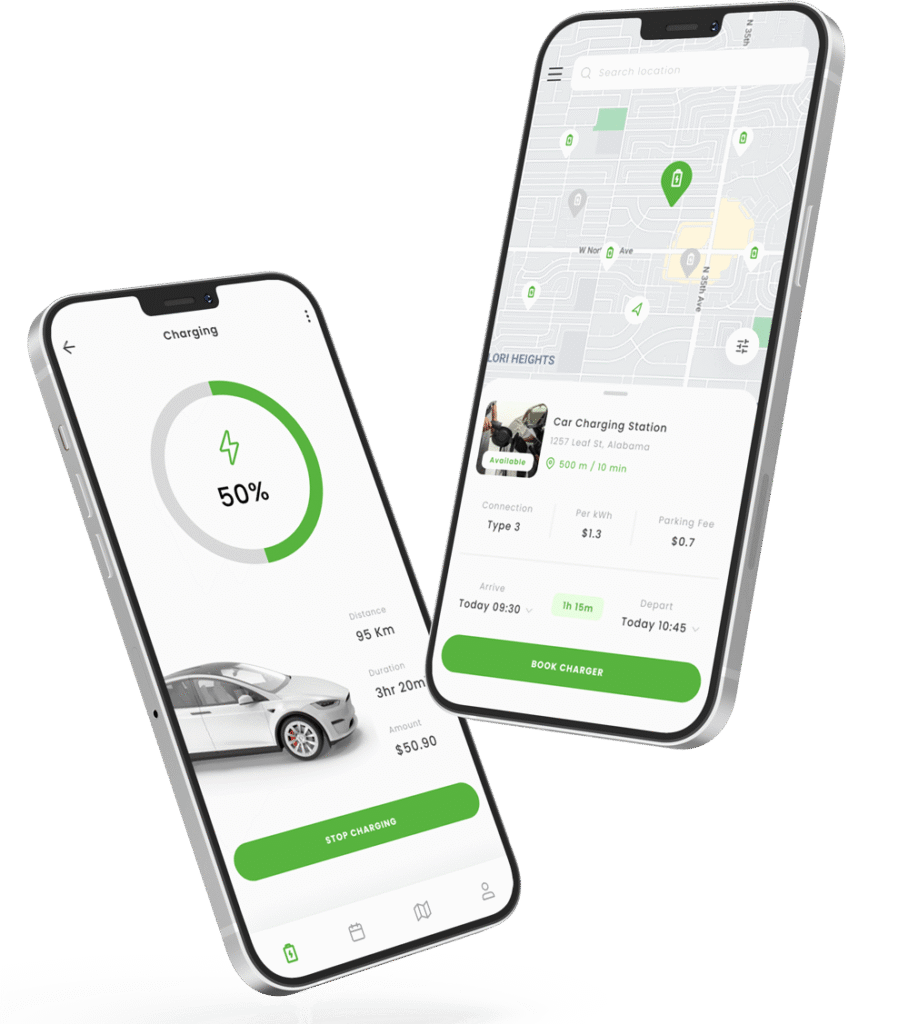
Find An Available Charging Station Near You With Our App

Easily search, book, and schedule charging sessions with a world-class software platform. Charge Point Operators enjoy remote monitoring, user management, billing, and reporting for full control and visibility 

Contact Us

Any Questions? Please share your details and a member of our sales team will reach out to you


Download Our Brochure

Do you need any help?

+91 8655997130
sales@zerofootprint.in

REACH OUT TO US 24/7 & 365 days

Our dedicated team is available 24/7 & 365 days to assist you with any queries to make your journey smoother.


Sessions
Battery
Days
Total Revenue: Rs 2,62,800
Platform Fee
DISCOM
Investment
Net EBITDA: Rs 1,05,280
ROI = 10-11 months
EV Charging Time Calculator

EV Charging Time Calculator

Questions And Answers

AC chargers connect directly to the electrical grid. This allows for safer and faster charging, typically delivering between 7kW and 22kW of power. However, the actual charging speed depends on two factors: the charger’s output and the car’s onboard charger capacity. 

All EV’s with compatible Type 2 charging port can be charged with AC Chargers.

For Eg. Nexon EV comes with Type 2 charging port and it can be easily charged  with a 7.2kW AC Charger 

While 7.5 kW is the fastest AC charger for cars which come with an on-board charger capacity of around 6 – 7 kW (like TATA Nexon, Tiago, MG ZS etc.), the 11kW or 22 kW are faster AC chargers for cars which come with higher on-board capacity (like Mercedes, BMW, Kia BYD, etc.).

Charging time depends on the charger type (power output), vehicle battery capacity, and remaining charge. On an average, an AC Charger charges an EV from 10% to 100% in 5-7 hours


The AC charger itself is relatively small and can be mounted on a wall. However, some extra space is required for installation, clearance, and a designated parking spot for the vehicle which will be charged


Typically AC charging stations use a 240V outlet.